What’s Really in the Box? A UK Parent’s Honest Christmas Eve Audit
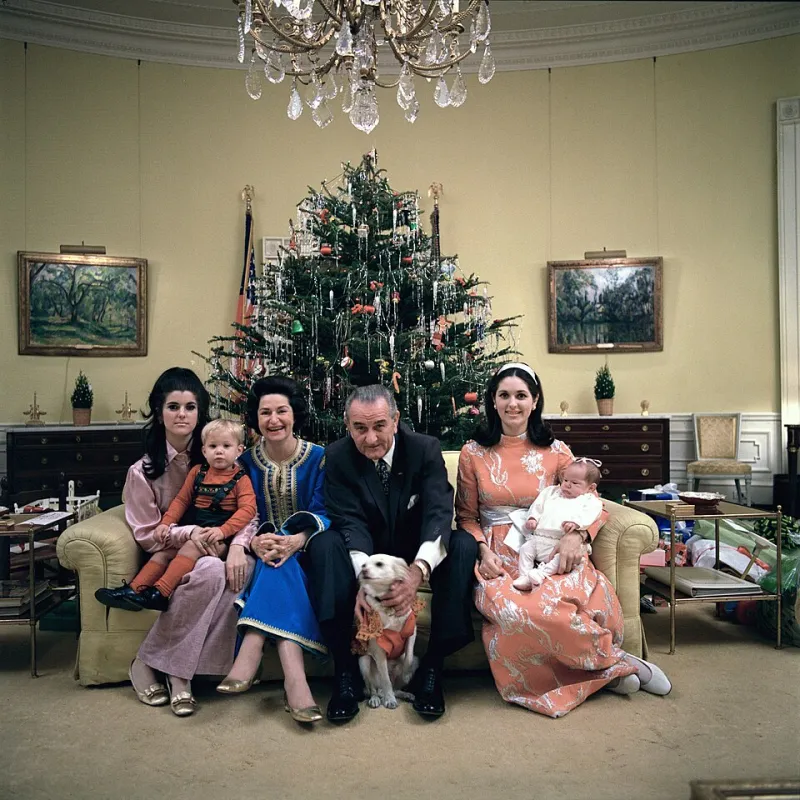
Photo: Frank Wolfe, Public domain, via Wikimedia Commons
As I write this on 13 November 2026, the supermarkets have already wheeled out the festive chocolate and the online shops are pushing matching family pyjamas. Somewhere between the advent calendars and the sprouts, there’s another December ritual quietly waiting for us: the Christmas Eve box.
If you’ve been on social media in the last few weeks, you’ll have seen them. Wooden crates lined with tissue paper, a new pair of pyjamas, a Christmas book, hot chocolate sachets, a little craft kit, maybe a handwritten note from Father Christmas. They look lovely. They also look like one more thing to buy, wrap, fill and remember at the exact point in December when most of us are already running on fumes.
So is the Christmas Eve box genuine magic, clever marketing, or just another parenting obligation dressed up in a bow? I asked around, did a bit of honest adding up, and came to a very British conclusion: it depends entirely on how you do it.
The box that started as a nice idea
The Christmas Eve box isn’t an ancient tradition. It’s a relatively modern one, popularised by social media and retailers, and it has shifted over the years from a simple treat to something closer to a second Christmas morning. For some families, it’s a calm moment before the chaos — a chance to slow down, put on new pyjamas and read a story together. For others, it’s a source of quiet guilt: the box they forgot to fill, the pyjamas that didn’t arrive in time, the pressure to make it look like the version on Instagram.
One mum I know in Leeds told me she spent £38 on two Christmas Eve boxes last year. “It was pyjamas, a book each, hot chocolate, a little tub of reindeer food and some stickers,” she said. “The kids loved it for about ten minutes. Then they asked if they could open a present early.” She’s not doing boxes this year. Instead, they’re having a Christmas Eve film night with popcorn and a blanket fort. “Same feeling, less faff,” she said.
Another parent in Cardiff has kept the tradition but changed the contents. “We use the same box every year — it’s a shoebox covered in old wrapping paper — and we put in a library book, hand-me-down pyjamas and a coupon for a hot chocolate walk,” she said. “It costs almost nothing, but they still get that little moment of surprise.”
What actually goes in — and what it costs
If you look at the typical Christmas Eve box, the contents fall into a few familiar categories. New pyjamas are the big one, often £8–£15 for a decent pair. A Christmas book comes next, usually £5–£8 unless you find one secondhand. Then there’s hot chocolate, marshmallows, a festive mug, reindeer food, a small craft or colouring set, bubbles, slippers or socks. Add a box or crate — £5 to £20, unless you reuse one — and you’re easily at £25–£40 per child before you’ve wrapped a single present.
That’s not a fortune in the grand scheme of Christmas, but it’s another line on the December spreadsheet. And it lands in the same week as school jumper days, teacher gifts, the class Christmas card list and the big food shop. For families watching every penny, it can feel like one more thing they’re supposed to do.
There’s also the expectation question. Children see the boxes online and in shops, and they remember. One dad in Birmingham said his daughter asked in October whether she’d be getting a Christmas Eve box this year. “She’s six,” he said. “I didn’t even know she knew what one was.”
Low-cost and no-buy versions that still feel special
The good news is that the Christmas Eve box is extremely adaptable. You can keep the ritual without the retail spend. Here are a few versions that families are trying this December.
The library book box. Use a book you already own or borrow one from the library. Add a handwritten note or a homemade bookmark. The point is the story, not the price tag.
The hand-me-down pyjama box. If you have older children, pass down a pair of festive pyjamas. If not, check charity shops or swap with a friend. Kids care about the novelty of opening something, not the label.
The experience box. Instead of stuff, put in a homemade voucher for a Christmas light walk, a film night, a bake-together session or a board game afternoon. It costs nothing and gives you something to look forward to on Christmas Eve itself.
The cupboard box. Raid the kitchen for hot chocolate, a few marshmallows and a biscuit, then add a Christmas DVD or a library book. Wrap the box in old paper or a tea towel. It still feels like a gift because it’s presented as one.
The shared box. One box for the whole family, with a film, a snack and a game, can work just as well as individual boxes — and it takes half the time to prepare.
The real question: magic or obligation?
I don’t think the Christmas Eve box is inherently bad. At its best, it’s a small, deliberate pause in a hectic week. It can be a lovely way to signal that Christmas is nearly here, to bring everyone into the same room, and to give children a calm activity before bed. The trouble starts when it becomes a performance — when the box has to match a certain look, contain a certain number of items, or compete with what other families are doing.
That’s the part we can choose to opt out of. If a box adds stress, it’s not magic. If it adds a ten-minute moment of joy and costs you nothing but a library book and a pair of hand-me-down pyjamas, it might be worth keeping. And if you’d rather skip it entirely and have a takeaway and a Christmas film instead, that’s a valid Christmas Eve too.
As we head into December 2026, the shops will keep selling the dream of the perfect Christmas Eve box. But the real magic isn’t in the box. It’s in the pause — the lights off, the tree on, the kids in whatever pyjamas they already own, and everyone finally sitting still for a minute. That part is free.