Torchlight and Tea: The Winter Pickup Reset UK Families Are Trying This November
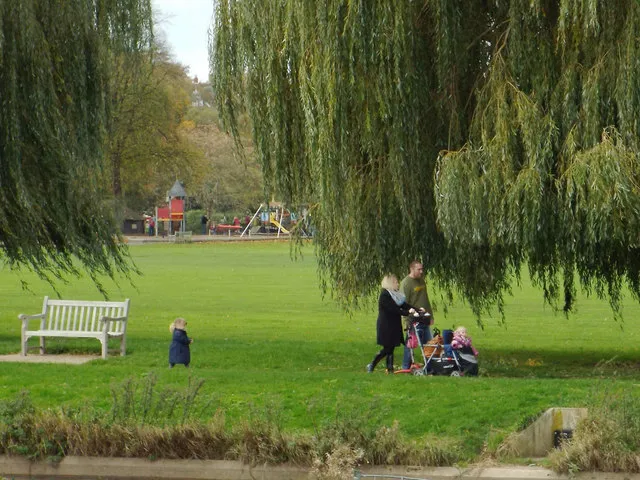
Photo: Robin Stott , CC BY-SA 2.0, via Wikimedia Commons
There is a particular kind of November light in the UK. Not proper darkness, not quite daylight either — just a grey-blue fade that starts somewhere around 3.30pm and seems to catch everyone off guard. By the time the school gate opens, the streetlights are on, the pavements are slick, and at least one child has lost a glove. Again.
Welcome to the winter pickup. In 2026, it feels like more families are talking honestly about this bit — not the cosy side of winter, but the practical, slightly chaotic slog of getting everyone home when the sky has already clocked off.
The 4.15pm reality check
On paper, the after-school run looks simple. Collect child. Go home. Make tea. In reality, it is a small logistical operation involving book bags, water bottles, a PE kit that was definitely supposed to come home on Tuesday, and a club that finishes at 4.15pm on one side of town while another child needs collecting at 4.30pm on the other.
By the time you add dark pavements, wet weather and the fact that everyone is hungry, the whole thing can feel like a second job. And that is before we get to the guilt — the nagging feeling that other parents are managing it better, that your child should be doing more clubs, or that you should be one of those families who walks home chatting about their day instead of hissing at each other to hurry up.
The cost is not only on the club invoice
After-school clubs are brilliant. They give children something to do, they cover the gap between school and work, and they can be a lifeline for parents who cannot magic up a 3.15pm finish. But the costs stack up quietly. There is the club fee itself, the snack you buy because they are starving, the taxi you take because the bus is late, the replacement torch because the first one got left in a hedge.
Then there is the invisible cost: the mental load of remembering which child is where, which day needs a packed tea, which club requires shin pads, and who is picking up whom if it rains. In lots of households, that admin is done by mums — often while pretending to listen to a work call. It is not just money that gets spent on the winter run. It is headspace.
When the dark becomes the deadline
Safety is the worry that sits underneath all of it. For parents of younger children, the walk home in the dark can feel genuinely unsettling. For parents of older children who walk alone, it is the constant low hum of wanting them to text when they arrive. For everyone, it is the driver who does not see a small person in a dark coat stepping out between parked cars.
That is why so many families are rethinking the route rather than just the timetable. Hi-vis tabards are back. Torches live by the front door. Some parents are using the same meeting point every day so children know exactly where to find them. Others are swapping the lonely walk for a group one — not a formal scheme, just a few families who have worked out that there is safety and sanity in numbers.
The walking bus with a WhatsApp group and a rota
You have probably seen it at your school gate: a small cluster of adults and children moving home together, one parent at the front, one at the back, a few children in the middle. It is not an official walking bus. It is just a rota that grew legs.
One mum I know started it after realising that three families on her street were all doing the same 20-minute walk at the same time, separately. Now they take turns. Two days a week she collects all five children. Two days another parent does it. The children have stopped moaning about the walk because there is someone to moan with. The adults have stopped dreading the dark because they are not doing it alone.
The etiquette matters, though. Ask before you assume. Be clear about days. Send a quick text if plans change. And do not treat the rota as a one-way favour — offer to take the whole gang when you can, even if it is not technically your turn. Small communities run on goodwill, not scorekeeping.
Club swaps and car-share manners
Car shares are another quiet solution. Two families, one pickup, half the driving. But they work best when everyone says the awkward thing out loud at the start: who drives when, how petrol money is handled, what happens if someone is late, and whether extra siblings are included.
The golden rules are simple. Confirm by text the day before. Do not spring a surprise extra child on the driver. Offer petrol money even if it is refused. And if you are the one being driven, be ready on time — standing in the dark with a car full of hungry children is not the moment for a relaxed attitude to shoes.
The routine that fits the dark
Perhaps the biggest shift is not a new scheme at all. It is a quieter decision: fewer clubs, simpler evenings. Some families are cutting one after-school activity per child this term and noticing that the sky feels less like an enemy. Others are batch-cooking tea on Sundays so the 5pm slot is not a negotiation. A few have started a torch basket by the door — charged, checked, and impossible to forget.
None of this is revolutionary. That is the point. Winter does not need a productivity system. It needs a bit of slack. Tea at five. A slow walk home. A text to say you are on your way. A neighbour who takes a turn.
Permission to hibernate a little
If you are reading this at 4.15pm with one child in a wet coat and another asking what is for tea, you are not doing it wrong. The winter pickup is hard because it is hard — dark, cold, expensive and relentless. The families who seem to have it sorted are usually just the ones who have admitted that and changed something small.
So this November, maybe the win is not another club. Maybe it is a torch by the door, a shared walk home, and the radical decision to let tea be beans on toast. The sunset club can keep its 4.15pm deadline. We are busy making our own way home.